.jpeg)
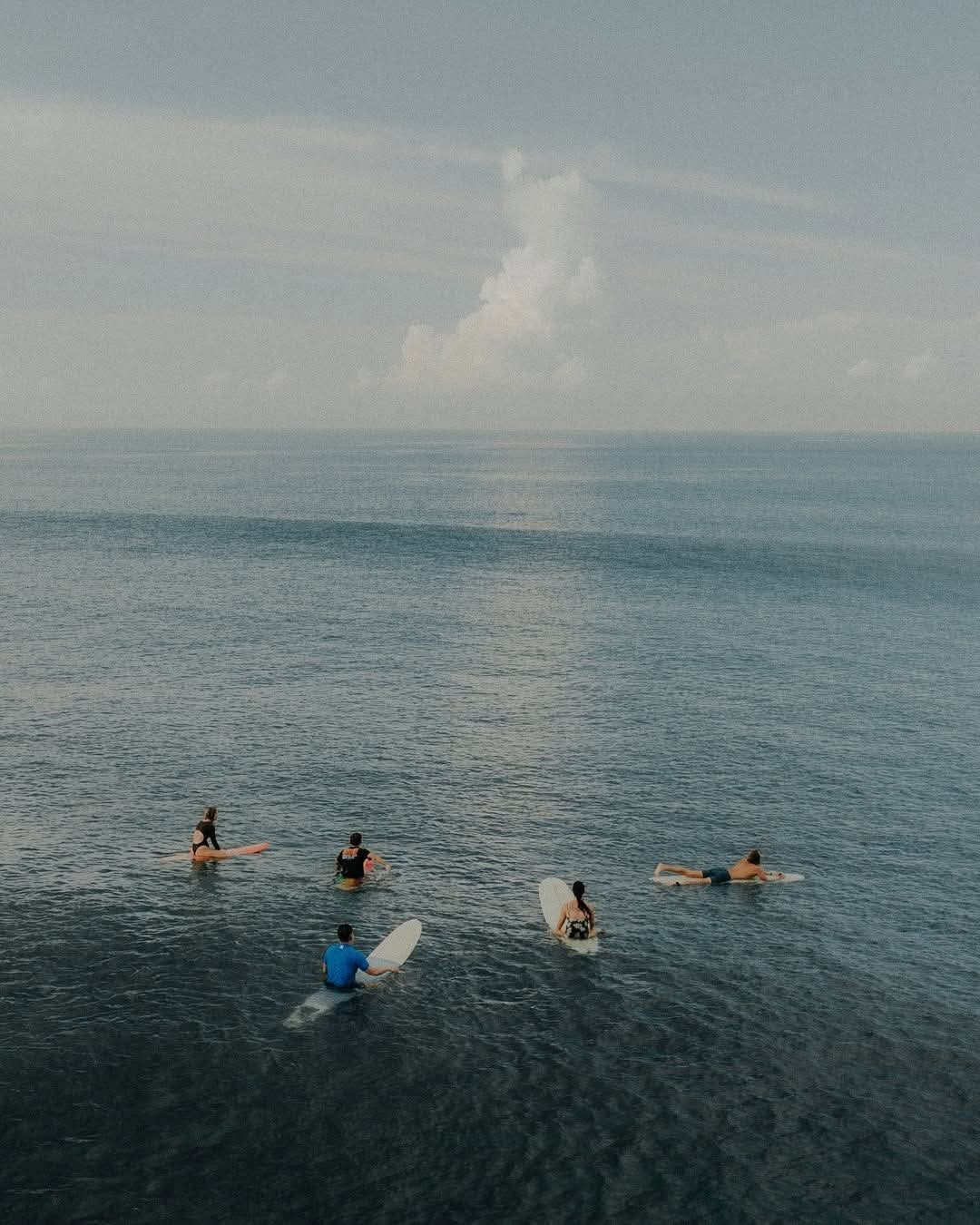
Bali is one of the most beginner-friendly surf destinations on the planet. Warm water, consistent waves, and expert local instructors make it the perfect place to catch your very first wave. But before you paddle out, a little preparation goes a long way. Here are five tips from Gede and the Bali Sun & Waves crew to help you get the most out of your first lesson.
Choose the Right Beach for Your Level
Not every Bali beach is right for beginners. Kuta Beach is the classic starting point — wide, sandy, and packed with instructors who have taught thousands of first-timers. The waves here are forgiving: small, rolling, and slow enough to give you time to pop up. Canggu's Batu Bolong is another excellent option with a friendly vibe.
Avoid Uluwatu, Padang Padang, or any reef break for your first outing. Those spots offer world-class barrels, but the sharp coral and powerful rips are unforgiving for beginners. Save them for when you're confidently riding green waves.
Pro tip: Ask your instructor which beach is best given the current swell direction and tide. Local knowledge beats any travel blog.
Dress Right — Rash Vest, Sunscreen & a Leash
Bali's sun is fierce, even on overcast days. A long-sleeve rash vest is non-negotiable — it shields you from UV rays and prevents the board from chafing your chest and arms during pop-ups. Pair it with a thick layer of reef-safe sunscreen on your face, neck, and the backs of your hands.
Your instructor will attach a leash between your ankle and the board's tail. Don't remove it. A loose board spinning in white water is a hazard to you and to other surfers. The leash keeps it close so you can pull it back and paddle out again quickly after wiping out.
What to pack: rash vest, reef-safe SPF 50+ sunscreen, flip-flops for the beach walk, a bottle of water, and a small towel. Leave the expensive jewellery at the hotel.
Listen to Your Instructor, Not Your Ego
The most common reason first-timers struggle is ignoring the land drills. Yes, lying on a board on dry sand looks funny. Do it anyway. Your instructor will walk you through the pop-up sequence — feet placement, where to look, how to shift your weight — and those 20 minutes on the beach will save you 20 wipeouts in the water.
When the instructor says "paddle, paddle, paddle — NOW!" trust them. They can read the wave behind you in a way you simply cannot yet. React quickly and commit fully. Half-hearted pop-ups are the leading cause of awkward faceplants.
Land drill checklist: hands flat beside your chest, push up, front foot between your hands, back foot shoulder-width behind — stand up and look at the horizon, not at your feet.
Learn to Fall Safely Before You Try to Stand
Falling is part of surfing — full stop. The goal in your first lesson isn't to avoid falling; it's to fall well. Always fall flat and to the side, away from the board. Cover your head with your arms as you come up. Never dive headfirst into unknown shallow water, and always surface with your hands above your head so the board doesn't hit you.
Once you're comfortable with falling, your fear drops dramatically and your riding improves fast. Beginners who tense up trying NOT to fall are actually more prone to injury than those who relax and accept the tumble as part of the fun.
Safe fall mantra: fall flat, fall wide, cover your head, surface arms-first. Repeat it in your head before every wave.
Stay Hydrated and Rest Between Sets
Paddling works muscles you've never used before. In Bali's heat and humidity, a two-hour lesson burns through your energy reserves fast. Drink water before you paddle out, and take a proper break on the shore every 30–40 minutes. Your pop-ups will be noticeably sharper after a short rest than after you grind through fatigue.
Eat something light 90 minutes before your lesson — banana, toast, or rice — but avoid a heavy meal. Many first-timers skip breakfast to avoid feeling sick; that's equally counterproductive. A fuelled body surfs better, recovers faster, and stays safer.
After the session: stretch your lower back, shoulders, and hip flexors. A cold coconut on the beach is the traditional Bali cool-down — and it actually works.

Written by
Gede Surya
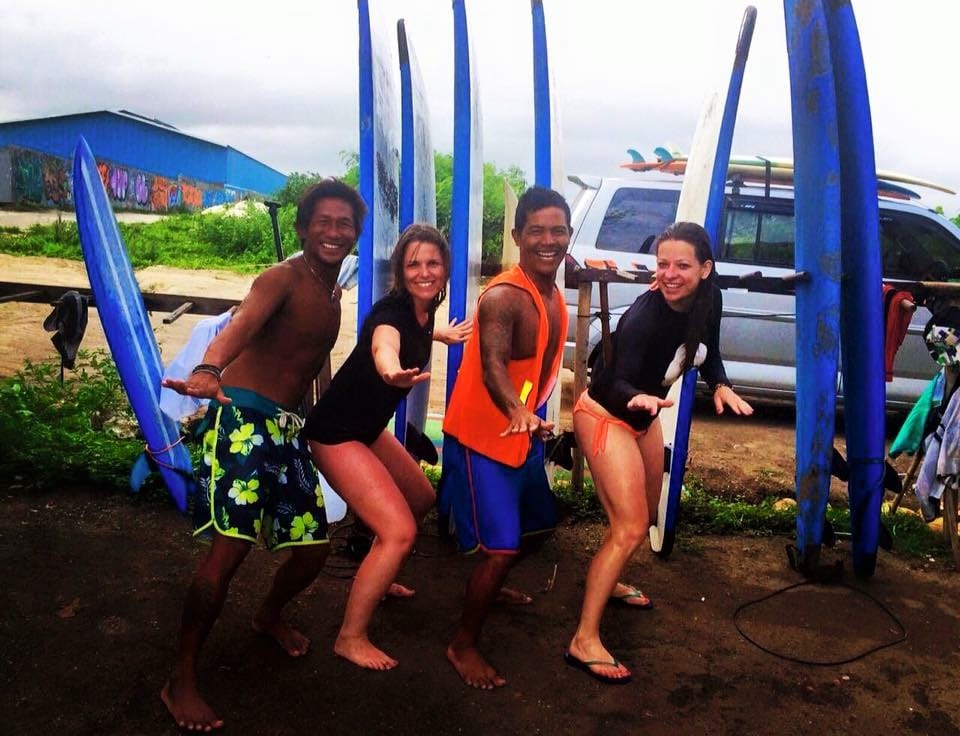
Bali-born surf instructor with 12 years of experience at Kuta and Canggu. Gede has taught over 3,000 first-timers and firmly believes anyone can stand up on their first day with the right guidance.
.jpeg)
.jpeg)